Blog
How to Set Up a Café-Style Coffee Station at Home — By Budget (From French Press to Grinder)


How to Set Up a Café-Style Coffee Station at Home — By Budget (From French Press to Grinder)
Short answer: you don’t need an espresso machine to build a great home coffee station. A brewer (like a French press), fresh beans, and a burr grinder are the core of it. As your budget grows, add a scale, a good kettle, an airtight storage canister, and a second brewer like a moka pot to build up to a café-style corner step by step.
Three Decisions Before You Buy Anything
- What do you drink? Strong espresso-style coffee, smooth black coffee, or milk-based drinks?
- How many people do you brew for? One or two people suits a moka pot or small French press; a larger group suits a bigger French press
- How much counter space do you have? In a small kitchen, a hand grinder and a compact brewer are the most practical
Budget is what you fill in after these three are settled, not before.
A Simple Rule for Splitting Your Budget
Put roughly 40–50% of your total coffee-equipment budget into the grinder, since it has the biggest effect on flavor. If you have money left over, upgrade your grinder or scale before buying small accessories. It’s smarter to buy fewer, better pieces than to buy the same equipment twice.
Level 1: Starter Setup (Lowest Budget)
Goal: get from instant coffee to fresh coffee at minimal cost.
What you need:
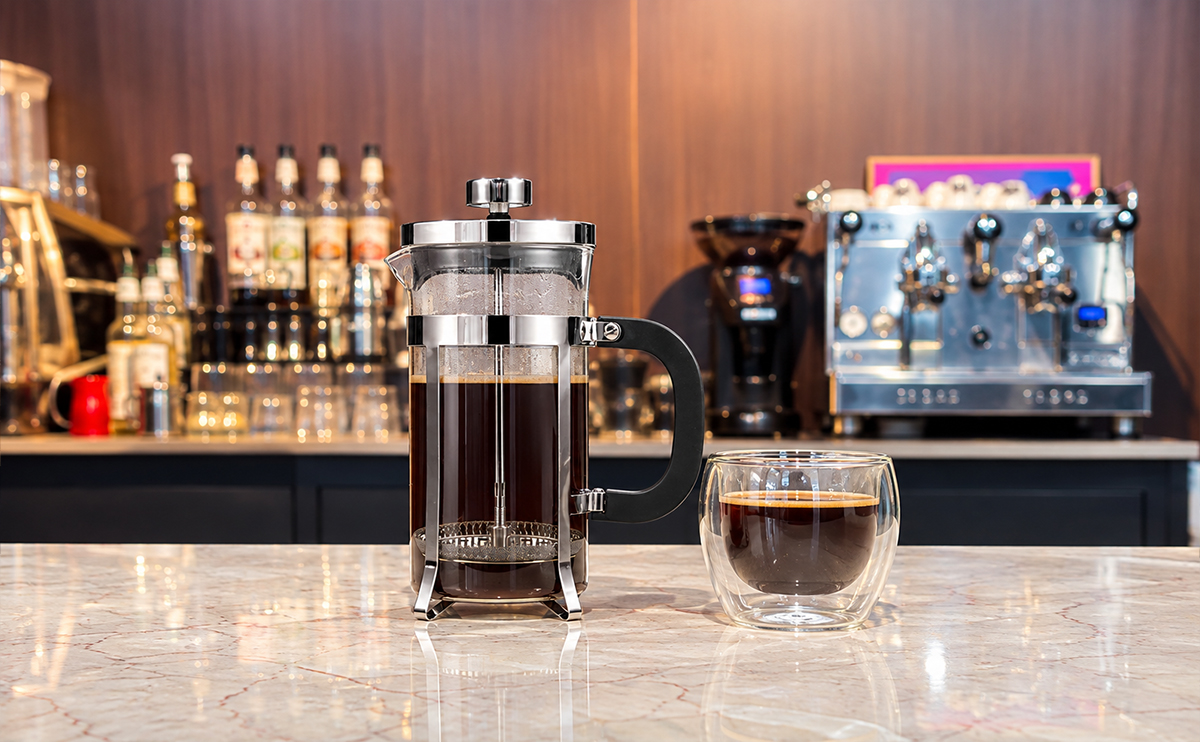
- A French press
- Coffee beans (or coarse-ground coffee for French press)
- Any kettle or pot you already own
- Your phone’s timer and a tablespoon for measuring
Why this is enough: the French press is the easiest, most affordable way to start, and it needs no complicated technique. Follow our step-by-step French press guide.
If you don’t have a grinder yet: buy coarse-ground coffee suited to a French press, and plan to add a grinder in the next level. See whole bean vs ground coffee for why.
Level 2: Standard Setup (Where the Real Difference Happens)
Goal: consistent, fresh-tasting coffee every time through fresh grinding and measured ratios.
Add to the starter setup:
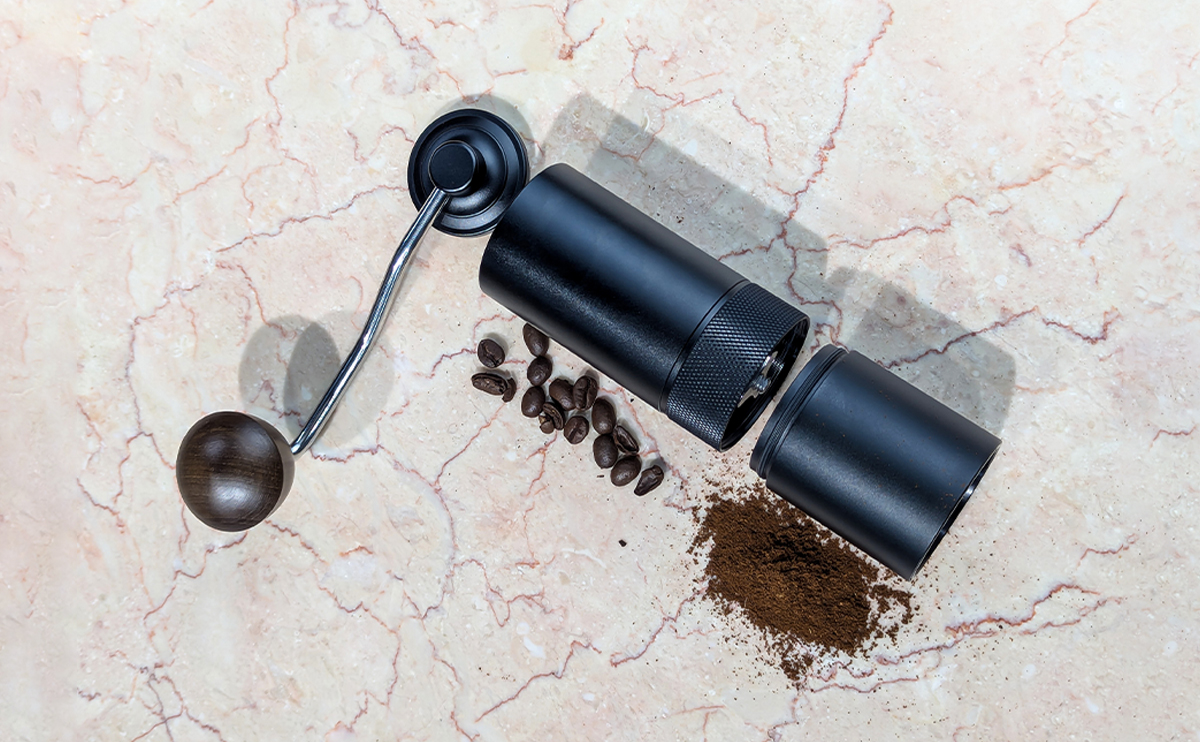
- A hand burr grinder — the single biggest upgrade. Choose burr, not blade (what to check before buying)
- A kitchen scale — for an accurate 1:15 ratio
- An airtight, opaque canister — to keep beans fresh (5 storage tricks)
- A dedicated kettle — to boil water and let it rest 30–45 seconds before pouring
Why it works: you control grind size, every cup is measured, and your beans stay fresh — together, that gets you close to café-quality results.
Level 3: Enthusiast / Café-Style Corner
Goal: multiple brewing methods and milk-based drinks in one complete corner.
Add to everything above:
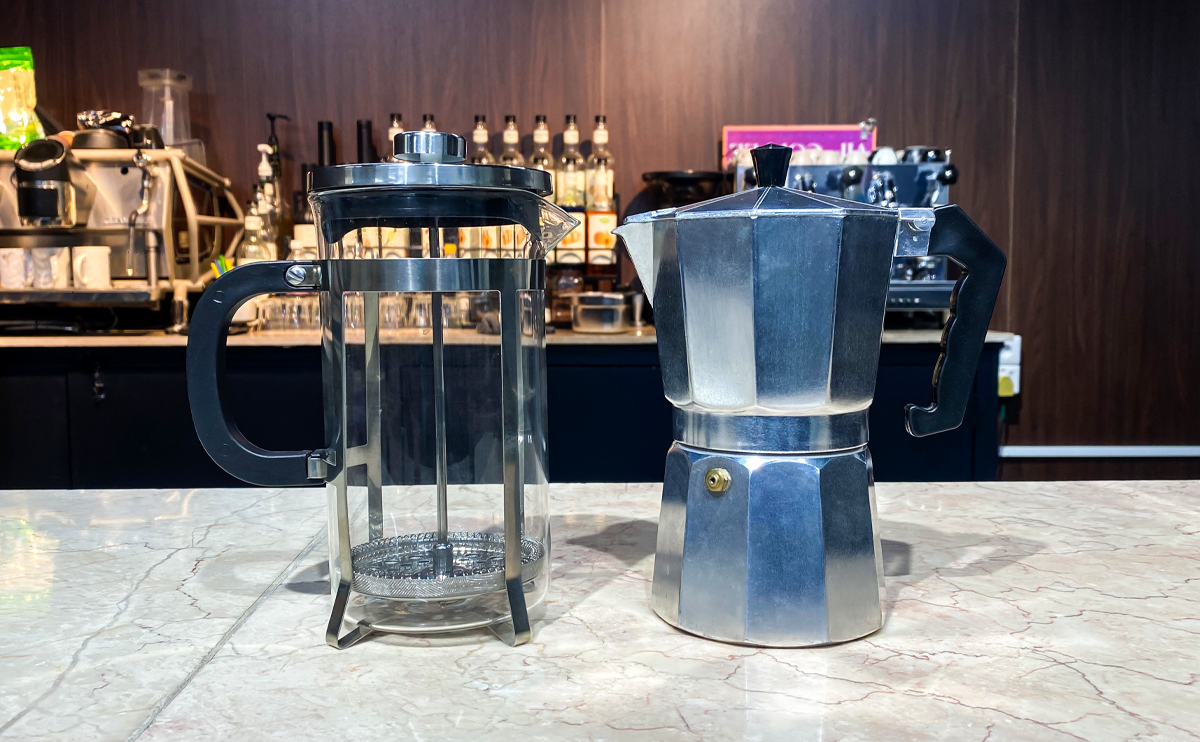
- A moka pot — a second brewer for concentrated, espresso-style coffee (French press vs moka pot, moka pot mistakes to avoid)
- A better grinder — more grind settings and greater consistency
- A controlled-pour kettle — more control over water temperature and flow
- A way to froth milk — you can even froth milk in a French press for lattes and cappuccino-style drinks
- Syrups and sauces — handy for flavored and sweeter coffees
- Nice cups and a tray — to make the station look and feel like a café
Which Brewer Should You Pick
| If you like | Best brewer | Roast that suits it |
|---|---|---|
| Smooth, full-bodied coffee for several people | French press | Medium or dark |
| Strong, espresso-style coffee for one or two | Moka pot | Medium to medium-dark |
| Lattes and milk drinks | Moka pot + frothed milk | Dark |
More on roast levels: light, medium, or dark roast.
Practical Tips for Laying Out Your Station
- Pick one dedicated corner — keeping everything together makes the daily routine easier
- Keep beans away from the stove and windows — heat and light are enemies of freshness
- Use a tray — it makes grounds and water spills easy to clean
- Arrange it in workflow order — beans, grinder, scale, brewer, cups, in a single flow
- Rinse right after brewing — especially a French press’s mesh and a moka pot’s filter
- In a small space, choose a hand grinder and a moka pot — both are compact and need no electricity
Where to Spend and Where to Save
Spend on:
- A burr grinder
- Fresh, good-quality beans
- Airtight storage
Save on:
- Designer cups (you can add them later)
- Extra accessories you won’t use regularly
- A blade grinder — it looks cheaper but limits your coffee quality
Frequently Asked Questions
What’s the cheapest way to start a coffee station? A French press, fresh coffee beans (or coarse-ground coffee), and a kettle you already have. That alone will beat instant coffee by a wide margin.
Do I really need a grinder? If coffee quality matters to you, yes. Fresh grinding and consistent particle size affect flavor more than almost anything else, and hand grinders are relatively affordable.
Can I make lattes without an espresso machine? Yes. Combine moka pot coffee (or strong French press coffee) with milk frothed in a French press for a homemade latte.
Should I buy a French press or a moka pot first? If you’re new, start with the French press — it’s simpler and more forgiving. Add a moka pot later if you enjoy strong, espresso-style coffee.
Bottom Line
A café-style coffee station isn’t built in a day. Start with a French press and fresh beans, then add a grinder, scale, and storage, and later a moka pot or other extras. Every step improves your cup, and before long your kitchen corner becomes your favorite café.
At Gold Coast Coffee Roasters, we stock freshly roasted beans, ground coffee, French presses, moka pots, and hand grinders. Need help choosing a setup for your budget and taste? Get in touch.